
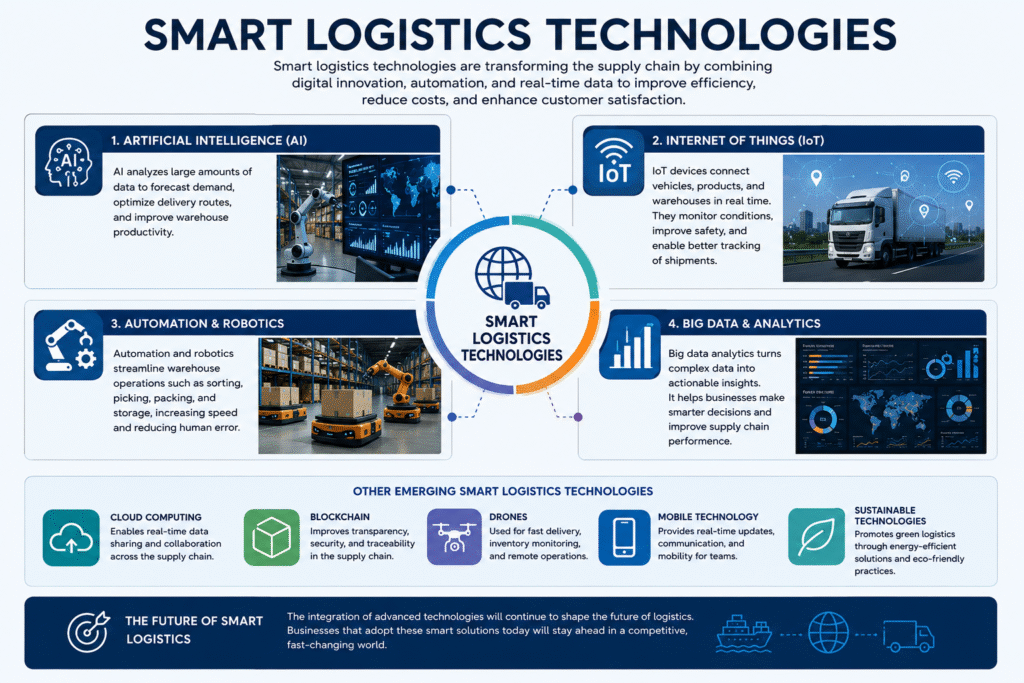
In today’s fast-moving global economy, logistics plays a vital role in the success of businesses. Companies must deliver products quickly, reduce operational costs, and satisfy customer expectations. To achieve these goals, organizations are increasingly adopting smart logistics strategies. These strategies combine technology, innovation, and efficient management practices to improve supply chain performance and transportation operations.
What Are Smart Logistics Strategies?
Smart logistics strategies refer to modern methods used to optimize the movement, storage, and distribution of goods. These strategies rely on digital technologies, data analysis, automation, and real-time communication to make logistics operations faster, safer, and more efficient.
The objective of smart logistics is not only to reduce costs but also to improve productivity, customer satisfaction, and environmental sustainability.
Key Components of Smart Logistics
1. Digital Transformation
Technology has transformed the logistics sector. Companies now use advanced software such as Transportation Management Systems (TMS), Warehouse Management Systems (WMS), and Enterprise Resource Planning (ERP) systems to manage operations effectively.
Digital tools help businesses:
- Monitor shipments in real time
- Improve inventory management
- Reduce paperwork
- Enhance communication between suppliers and customers
2. Automation and Robotics
Automation is becoming an essential part of logistics operations. Warehouses use robots and automated machines to handle storage, packaging, and order preparation.
Benefits of automation include:
- Faster order processing
- Reduced human error
- Lower labor costs
- Improved operational efficiency
3. Data Analytics and Artificial Intelligence
Data analysis helps companies make better decisions. Artificial Intelligence (AI) can predict customer demand, optimize delivery routes, and identify operational risks.
Using AI in logistics allows businesses to:
- Improve forecasting accuracy
- Reduce fuel consumption
- Prevent delivery delays
- Optimize fleet management
4. Real-Time Tracking
Customers expect transparency and fast delivery services. GPS tracking and IoT (Internet of Things) technologies allow companies to monitor vehicles, products, and warehouse activities in real time.
Real-time tracking improves:
- Shipment visibility
- Customer trust
- Security of goods
- Delivery performance
5. Sustainable Logistics
Environmental sustainability has become a major concern in logistics. Smart logistics strategies encourage eco-friendly transportation and energy-efficient operations.
Examples include:
- Using electric vehicles
- Optimizing delivery routes
- Reducing packaging waste
- Implementing green warehouse solutions
Benefits of Smart Logistics Strategies
Organizations that adopt smart logistics strategies gain several advantages:
- Reduced operational costs
- Faster delivery times
- Better inventory control
- Increased customer satisfaction
- Improved competitiveness
- Enhanced supply chain visibility
- Greater flexibility during market changes
Challenges in Implementing Smart Logistics
Despite its benefits, smart logistics also presents challenges. Some companies face difficulties such as:
- High technology investment costs
- Cybersecurity risks
- Employee training requirements
- Resistance to organizational change
Businesses must develop clear strategies and invest in employee skills to successfully implement smart logistics systems.
Conclusion
Smart logistics strategies are transforming the future of transportation and supply chain management. By integrating technology, automation, data analysis, and sustainable practices, companies can improve efficiency and remain competitive in a rapidly changing market.
In the modern business environment, organizations that embrace smart logistics solutions are better prepared to meet customer demands, reduce costs, and achieve long-term success.